
Vascular Access Device Insights for 2026 Canton Fair Buyers
The upcoming 2026 Canton Fair presents significant opportunities for buyers focused on Vascular Access Devices. With the event scheduled in April and May, attendees will encounter various advanced medical technologies. Emerging innovations highlight the growing importance of effective vascular access in healthcare settings.
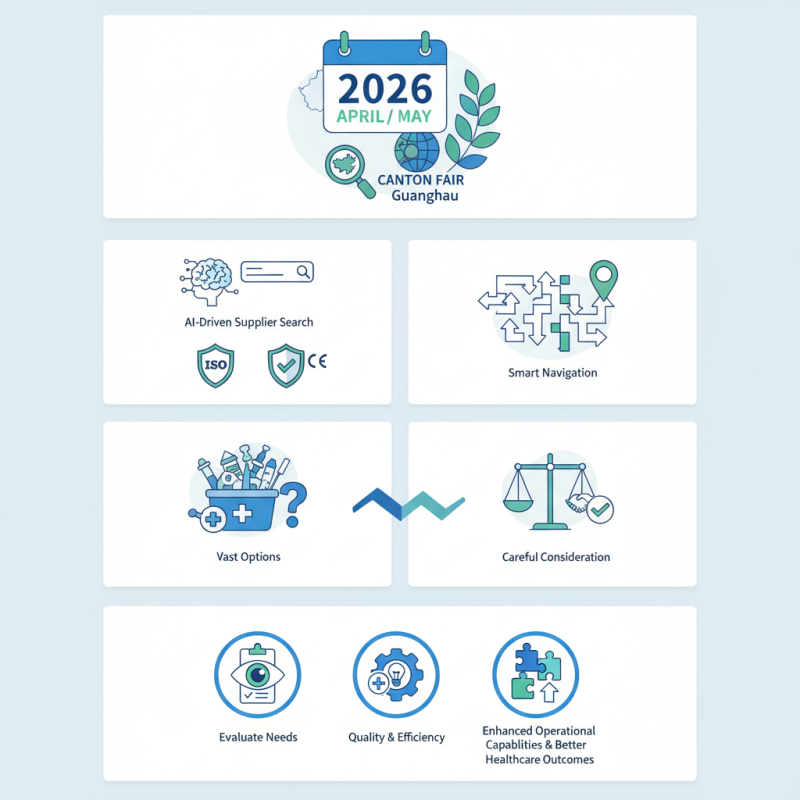
Buyers will benefit from AI-driven tools for supplier searches. These tools streamline the identification of vendors who meet specific certifications like ISO and CE. Moreover, the smart navigation feature simplifies movement within the large exhibition space. However, the vast array of options can be overwhelming for some. Careful consideration is necessary to select the right partners.
It is essential for participants to evaluate their needs closely. Not every supplier will align with their expectations. Additionally, the emphasis on quality and efficiency is vital. Balancing innovation with proven solutions will ultimately foster better healthcare outcomes. Engaging with the right vendors at the fair could enhance operational capabilities in the field of vascular access.
Overview of Vascular Access Devices and Their Importance
Vascular access devices (VADs) serve as crucial tools in modern healthcare. They enable efficient delivery of medications, fluids, and blood products. Their design must cater to patient safety and comfort. Various types of VADs exist, including peripheral catheters and central lines. Each serves specific needs within clinical settings. While they enhance treatment efficiency, complications can arise.
Infections and thrombosis are common concerns associated with VADs. Proper education and training for healthcare providers are essential. They must learn how to handle these devices effectively. Regular maintenance and monitoring play significant roles in minimizing risks. Sometimes, facilities may overlook the importance of routine checks, which can lead to adverse outcomes. Awareness of trends and advancements in VAD technology helps improve practice.
It's imperative to consider patient experience as well. Some individuals may experience pain or anxiety associated with insertion procedures. Exploring patient feedback can help refine techniques. This feedback loop can foster an environment of continuous improvement. As the industry evolves, understanding the importance of VADs will pave the way for safer, more effective patient care.
Trends in Vascular Access Technology for Healthcare Buyers
As the 2026 Canton Fair approaches, healthcare buyers are keen on vascular access technology. This area is evolving rapidly. New devices are being designed for improved patient comfort and reduced infection rates. Creating a seamless experience is crucial for medical staff and patients alike.
The latest trends indicate a shift towards more sustainable materials. Devices made from biodegradable substances are becoming more common. This change reflects a growing concern for environmental impact in healthcare. However, challenges remain. Cost considerations and the need for rigorous testing create barriers. Some healthcare facilities struggle to adopt these new technologies fully.
User-friendly designs are another trend gaining traction. Devices that simplify the insertion process can help staff work more efficiently. Yet, training is often necessary to ensure proper use. This aspect raises questions about the consistency of implementation. These developments in vascular access technology highlight both promise and complexity for future healthcare advancements.
Key Factors to Consider When Selecting Vascular Access Devices
When selecting vascular access devices, several key factors come into play. Buyers should prioritize patient comfort. Devices that are ergonomically designed can help alleviate discomfort. It is essential to assess the materials used. Biocompatible materials can reduce complications like infection and inflammation.
Also, consider the device’s ease of use. Staff training may be necessary if the product is complicated. However, overcomplicated devices can lead to mistakes. Usability can impact patient safety significantly.
The availability of different sizes and styles is another factor to think about. A variety of options can cater to different patient needs.
Lastly, think about the cost-effectiveness of the devices. While it may be tempting to go for cheaper options, they may not always provide the best value. Balance the upfront costs against long-term benefits. Adopting a thoughtful approach to these considerations will lead to better outcomes. Ignoring these factors could compromise not just the patient experience but also the overall efficacy of the treatment.
Market Insights: Demand and Supply Dynamics for 2026
The demand for vascular access devices continues to rise as healthcare needs evolve. In 2026, buyers at the Canton Fair will witness significant changes in this market. Hospitals and clinics increasingly prioritize reliable and efficient devices. There is a growing need for innovative solutions that enhance patient comfort and safety. Yet, suppliers face challenges in keeping up with this increasing demand.
The supply dynamics are complex. Manufacturers must navigate issues like material shortages and production delays. Some suppliers may struggle to meet the urgent needs of buyers. Feedback indicates that many buyers seek products that offer and easy usability. However, not all companies can deliver on these expectations. Many products still show room for improvement in design and functionality.
Despite these challenges, the market holds potential. Emerging technologies promise to change the landscape of vascular access devices. Insights from the Canton Fair will guide buyers in identifying the most valuable offerings. Collaboration between buyers and suppliers can lead to breakthroughs. Yet, it requires an open dialogue about product performance and patient outcomes. The focus should be not only on quantity but also on quality and innovation.
Innovations in Vascular Access Solutions at the Canton Fair
The Canton Fair in 2026 will showcase significant innovations in vascular access solutions. These advancements are crucial for patient care and safety. According to recent industry reports, the global vascular access device market is set to reach over $5 billion by 2026. This growth highlights the demand for more efficient and safer access devices.
New designs for catheters and ports are emerging. Many devices now focus on reducing infection rates. For example, antimicrobial coatings are becoming standard. They can lower the risk of central line-associated bloodstream infections. Such advancements could lead to fewer patient complications and lower healthcare costs.
However, the industry faces challenges. Not all innovations guarantee improved outcomes. Some new products might not receive adequate testing. This can raise concerns about long-term safety. Ensuring rigorous evaluations before widespread use is essential. Feedback from medical professionals is critical. Their insights can guide future developments and enhance device reliability. The Canton Fair will be an excellent platform for discussions and collaborations in this evolving field.
