
10 Best Bandage Manufacturers for Global Buyers
Choosing the right Bandage Manufacturer can influence product safety, supply continuity, and customer trust. Global buyers need more than attractive catalogs and competitive prices. They need verified production capabilities, consistent materials, and dependable quality controls.
This guide examines ten leading Bandage Manufacturers serving international markets. It considers adhesive strength, skin-friendly materials, sterile packaging, product customization, and manufacturing capacity. Some suppliers focus on basic adhesive strips, while others produce elastic bandages, wound dressings, and specialized medical tapes. Details such as batch numbers, carton labeling, and humidity protection can reveal a supplier’s operational discipline.
Quality systems matter. Buyers should review certifications, inspection records, testing procedures, and traceability practices before signing an agreement. A factory tour, independent audit, or sample evaluation may expose differences that marketing pages hide. Practical experience also shows that low pricing can bring hidden costs through inconsistent dimensions, weak packaging, or delayed shipments.
No ranking is permanent.
Supplier performance can change with ownership, equipment, or raw material availability. This overview offers a useful starting point, not a substitute for careful due diligence. Buyers should confirm current certifications, export experience, minimum order quantities, lead times, and applicable market requirements directly with each manufacturer. The strongest partnership is not always the largest supplier. It is often the one that communicates clearly, documents its processes, and responds responsibly when something goes wrong. Mistakes happen. Reliable manufacturers learn from them.
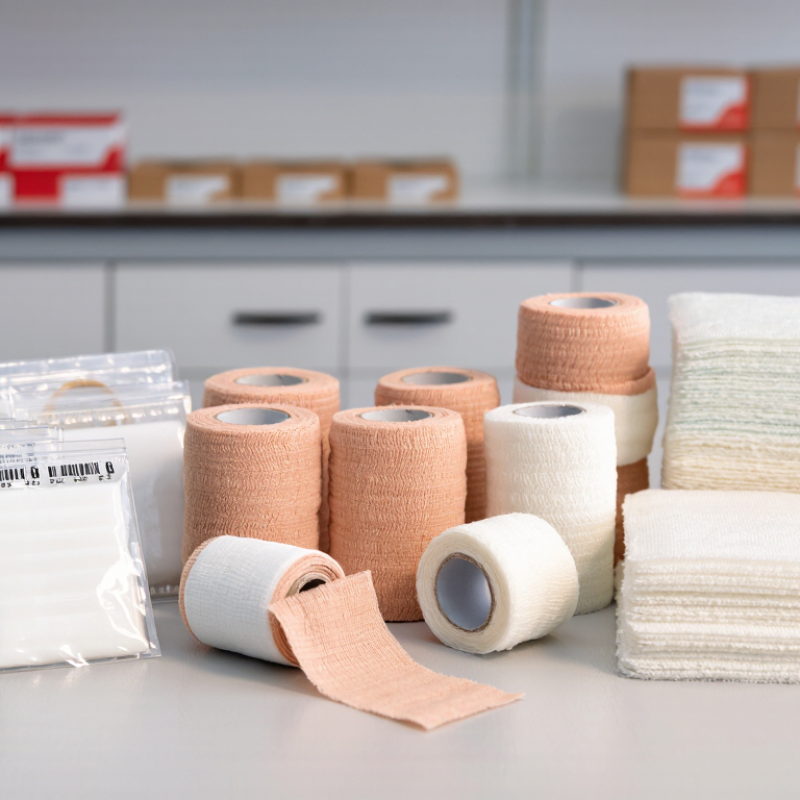
Global Bandage Market Scope: Types, Demand, and 2024–2030 Growth Indicators
The global bandage market includes adhesive strips, gauze, elastic wraps, compression products, hydrocolloid dressings, and advanced foam formats. Demand differs sharply by use. Home first-aid favors simple adhesive products, while hospitals require sterile, absorbent, and skin-friendly designs. According to Grand View Research’s 2024 wound care market analysis, the wider market reached about USD 21.4 billion in 2023 and may grow near 4% annually through 2030. Bandages represent only one segment. This distinction matters.
Aging populations, diabetes, sports injuries, and outpatient treatment are supporting demand. The World Health Organization reports that one in six people globally will be aged 60 or older by 2030. That shift increases the need for gentle removal, reliable adhesion, and repeated wound protection. Fortune Business Insights also projects steady growth for the broader wound care sector between 2024 and 2032. Regional demand remains uneven. Asia-Pacific shows strong volume potential, while mature markets emphasize clinical evidence and infection-control practices.
Buyers comparing the 10 best manufacturers should examine material safety, sterile production, testing records, and supply continuity. Packaging size matters too. A rural clinic may need compact cartons and long shelf life. A surgical distributor may require traceability and customized specifications. Public market data is useful, but not perfect. Definitions vary between reports, and bandage-only forecasts can overstate precision. Procurement teams should verify local standards, real-world failure rates, and delivery performance before trusting a growth chart.
Bandage Manufacturer Evaluation: ISO 13485, ISO 10993, and Five Buyer Metrics
Choosing among the 10 best bandage manufacturers requires more than comparing catalogs and prices. A reliable evaluation begins with ISO 13485. This standard shows whether the manufacturer controls design, production, complaints, and corrective actions. Ask for a current certificate and confirm its scope. A certificate with unclear product coverage deserves closer review.
ISO 10993 evidence is equally important for products touching damaged skin. Request test reports for irritation, sensitization, and cytotoxicity when applicable. Check whether the tested adhesive, backing, and absorbent pad match the proposed bandage. Small material changes can affect skin response. Do not accept a generic report without checking laboratory details and sample identity. It is easy to overlook this step.
Five buyer metrics create a practical comparison: defect rate, batch consistency, lead time, minimum order quantity, and total landed cost. Inspect sample edges, release liners, absorbency, and package seals. Record findings with photographs. Ask how production lots are traced and how complaints are investigated. Communication quality matters, too, especially when specifications change. A low quote may hide longer approval cycles or repeated defects. I have found that transparent manufacturers welcome difficult questions, although no supplier performs perfectly every time. Review their weak points honestly. Require corrective action records, realistic capacity figures, and written acceptance criteria before placing a large order.
Top Global Bandage Manufacturers: Product Range, Production Capacity, and Markets
10 Best Bandage Manufacturers for Global Buyers
A useful review of ten leading bandage manufacturers should examine more than price. Their product ranges may include adhesive strips, gauze rolls, cohesive wraps, waterproof dressings, elastic supports, and hydrocolloid patches. Strong suppliers usually offer both sterile and non-sterile options. They also adjust size, material, packaging, and adhesive strength for different markets.
Production capacity matters when demand changes quickly. Large facilities may operate several automated lines and maintain backup material suppliers. Buyers should request monthly output, minimum order quantities, sampling time, and average lead times. Capacity figures can mislead without production records. An audit of clean areas, packaging controls, batch traceability, and defect rates gives better evidence. Compliance with relevant quality systems, such as ISO 13485, should be verified through current documents.
Market coverage is another practical measure. Experienced manufacturers often serve hospitals, pharmacies, sports retailers, emergency suppliers, and online distributors across multiple regions. They should understand language rules, labeling requirements, shelf-life expectations, and import documentation. A supplier may have broad export experience but weak after-sales communication. That weakness can delay corrective action. Buyers should test samples under heat, humidity, and repeated movement before approving a large order. Small details matter, especially adhesive residue, edge lifting, and easy removal.
Compliance and Quality Data: FDA 510(k), CE MDR, and EN 13726 Requirements
For global buyers, a bandage is not merely a low-cost consumable.
Its claims, materials, and manufacturing controls determine the required evidence. In the United States, FDA 510(k) clearance may apply to certain wound dressings. It demonstrates substantial equivalence to a legally marketed device. It does not mean universal approval.
Ask for the product-specific clearance number, intended-use statement, and applicable classification. Some low-risk products may follow different pathways. Confirm this carefully.
For European sales, CE marking under the Medical Device Regulation requires documented conformity.
The technical file should cover risk management, clinical evaluation, labeling, and post-market surveillance. Buyers should review the EU Declaration of Conformity and authorized representative details.
Supplier records should match the exact product and manufacturing site.
EN 13726 provides test methods for absorbency, moisture vapor transmission, waterproofness, and related dressing performance.
Request reports showing the method, sample size, lot number, test date, and laboratory identity. Compare results with the supplier’s claims, not only its marketing sheet.
Inspect seal integrity, expiry dating, traceability, and change-control records. Retained samples and complaint trends reveal practical quality.
Numbers can look impressive. One failed lot still matters.
Buyers should also question unclear deviations, because overlooked details often become expensive after shipment.
Sourcing Comparison: MOQ, Lead Time, Private Label Support, and Unit Costs
10 Best Bandage Manufacturers for Global Buyers
Comparing bandage manufacturers requires more than checking the lowest quoted price. MOQ, lead time, private label support, and unit cost often change together. In practical sourcing projects, trial orders commonly range from 1,000 to 5,000 pieces. Larger runs may reduce costs, but they also increase inventory risk.
A reliable supplier should state production capacity, material specifications, packaging options, and batch traceability. Standard adhesive strips may cost around $0.02–$0.08 per unit at volume, while larger sterile dressings cost more. These figures are only working references. Cotton content, adhesive performance, backing material, and individual wrapping can shift the final price. Cheap is not always efficient.
Lead times of 15–30 business days are common after artwork approval. Custom packaging may add sampling, printing, and plate charges. Ask whether these fees are refundable after mass production. Private label support should include artwork checks, barcode placement, packaging samples, and documented quality inspections. Some manufacturers offer flexible MOQs for printed boxes, but not for custom-shaped products.
I once compared quotations that looked nearly identical. One excluded inner cartons and inspection costs. The final landed cost was much higher. That mistake still matters. Buyers should request a complete quotation, production sample, inspection report, and delivery schedule before ranking suppliers. A factory that answers slowly may still produce well, but unclear communication deserves careful review.
