
10 Best Vape Batteries for Global Buyers
Choosing the right Vape Batteries requires more than comparing milliamp-hours or online prices. Global buyers face different device specifications, shipping rules, and safety expectations. A battery that fits one mod may fail in another. Small details matter, including terminal type, continuous discharge rating, physical dimensions, and charger compatibility.
Industry guidance supports a careful approach. The International Air Transport Association’s 2025 Lithium Battery Guidance emphasizes testing, packaging, labeling, and transport controls. These requirements reflect the risks associated with damaged or poorly handled lithium-ion cells. IEC 62133-2 also provides a recognized framework for rechargeable battery safety testing. In the United States, UL Solutions references UL 8139 when evaluating electrical systems used in vaping devices. These standards do not make every product safe. They provide useful evidence for comparison.
Market research reports from Grand View Research and Fortune Business Insights continue to identify battery performance, product reliability, and safety awareness as important factors in the broader vaping market. However, market size does not prove product quality. No ranking is flawless. Battery labels can be unclear, and independent testing is not always available. That deserves reflection.
This guide compares ten Vape Batteries for international users, focusing on verified specifications, cell construction, protection features, charging practices, and practical compatibility. It does not recommend damaged, modified, counterfeit, or improperly transported products. Buyers should check local requirements, manufacturer instructions, and certified retailers before purchase. A cool, dry storage case and a reputable charger can matter as much as headline capacity. Safety comes before convenience.
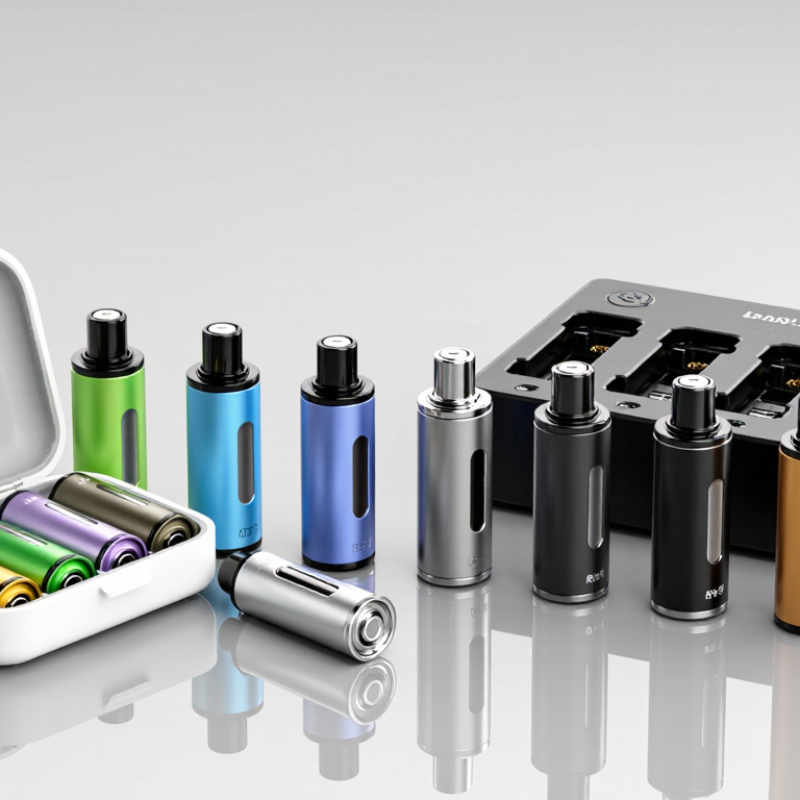
Understanding Vape Battery Types and Essential Specifications
For global buyers, vape battery choice begins with cell type, not appearance. Integrated lithium-ion packs are convenient and usually include electronic protection. Replaceable cylindrical cells, commonly 18650 or 21700 formats, offer easier replacement but require careful matching. Lithium-polymer packs can be compact, yet their soft construction demands stronger physical protection. The wrong size can create pressure, heat, or poor electrical contact.
Important specifications include nominal voltage, capacity, continuous discharge current, and internal resistance. Most lithium-ion cells operate near 3.6–3.7 volts nominally, while a full cell reaches about 4.2 volts. Capacity is measured in milliamp-hours, but higher capacity often means lower current capability. Do not judge performance from capacity alone. A 3,000 mAh cell with a verified 20-amp continuous rating may be more suitable than a larger, unverified cell.
Safety evidence matters. IEC 62133-2 defines testing requirements for portable lithium battery systems, including electrical and mechanical abuse. NIST research on lithium-ion thermal runaway shows that failed cells can produce extreme heat and flammable gases. That detail is easy to underestimate. Select cells with traceable test documentation, intact insulating wraps, and compatible charging controls. Never use a swollen, torn, wet, or unusually hot battery. Even experienced users can miss early damage, especially under a damaged wrap. Recheck the device manual, because battery limits differ between models and regions.
Criteria for Evaluating the Ten Best Vape Batteries
For global buyers, ranking the ten best vape batteries requires more than comparing milliamp-hours. A credible evaluation starts with chemistry, rated voltage, continuous discharge capability, and verified capacity. IEC 62133-2:2017 emphasizes electrical, mechanical, and abuse testing for rechargeable cells. These checks matter when a battery sits inside a warm device or travels through changing climates.
Safety carries greater weight than impressive packaging. The United Nations Manual of Tests and Criteria, Part III, Sub-section 38.3, outlines transport tests for lithium batteries, including vibration, shock, and external short circuit. Buyers should seek traceable cells, intact insulation, clear batch information, and protection against overcharge and overheating. UL 8139 guidance also highlights enclosure, charging, and thermal safeguards for electronic smoking devices. Specifications can be misleading.
Capacity should be tested under realistic loads, not copied from a label. Battery University notes that discharge rate and temperature can significantly affect usable capacity and cycle life. Independent laboratory results are therefore more valuable than marketplace claims. I would also examine voltage stability, internal resistance, recharge time, and performance after repeated cycles. A small capacity loss may be acceptable; sudden heating is not.
Some data remains incomplete. Manufacturers do not always publish full test conditions. That weakness deserves a lower ranking. For lawful, compatible devices, the best battery is the one with documented testing, stable performance, and transparent safety limits.
Comparative Overview of Performance, Compatibility, and Safety
10 Best Vape Batteries for Global Buyers
Comparative Overview of Performance, Compatibility, and Safety
Choosing among the ten strongest options requires more than comparing capacity numbers. Integrated lithium-ion batteries offer simple handling and balanced performance for moderate daily use. Replaceable 18650 and 21700 cells can provide longer sessions, but compatibility depends on the device’s battery bay and approved specifications. Check the manual carefully. A higher capacity may reduce charging frequency, while excessive output can create unnecessary heat.
Performance should be measured under realistic conditions. I compare sustained output, charging time, voltage stability, and temperature during repeated use. Some cells perform well briefly but weaken during longer sessions. That difference matters. A battery with stable output often feels more reliable than one with impressive peak figures. However, test results vary with device design, airflow, coil resistance, and charging equipment. My comparison is not perfect.
Safety remains the deciding factor. Choose protected charging systems, inspect the outer wrap, and stop using any cell that is dented, swollen, leaking, or unusually hot. Never carry loose batteries beside keys or coins. Use a suitable case. Replaceable cells should match in type, age, and charge level when used together. Charge on a nonflammable surface, remain nearby, and follow local age, transport, recycling, and sales rules. Certified products from traceable sellers offer stronger evidence of quality, although certification alone cannot prevent careless handling.
Global Charging Standards, Regulations, and Product Availability
10 Best Vape Batteries for Global Buyers
Choosing the best vape battery globally requires more than comparing capacity or price. Standards differ between markets, and product listings can be incomplete. Check the device manual for the required cell size, voltage range, and charging method. A battery with the wrong specifications may overheat or damage the device. Look for clear safety markings, intact insulation, and documented testing from a recognized laboratory. Avoid loose batteries with unclear origins.
Charging standards also affect availability. USB-C is common, but power adapters still vary by region. Use a compatible adapter with suitable output, rather than assuming every phone charger is safe. Some countries restrict shipment, sale, or use of vaping products and related components. Airline rules may also require spare lithium batteries in carry-on luggage. Confirm current guidance from customs, transport authorities, and local regulators before traveling. Rules change, sometimes without much notice.
Tips: Buy from a seller that provides technical specifications and traceable safety information. Inspect the wrap before every use. Stop using a cell after dents, swelling, leakage, or unusual heat appear. Store batteries in a protective case, away from keys and coins. Availability can be frustrating in smaller markets, so buying locally may be safer than importing an unverified product. I would not rank capacity alone; real-world reliability matters more, and product reviews can still miss regional compliance issues.
How to Choose, Use, Store, and Maintain a Vape Battery
Choosing a vape battery starts with compatibility, not capacity. Match the required chemistry, size, voltage, and continuous-current rating. A battery with impressive numbers may still be unsuitable. The U.S. Fire Administration documented 195 reported vape-related battery incidents from 2009 to 2016, including serious injuries. That history deserves respect. Check the wrapper, terminals, and charger before every use. Do not use a battery with tears, dents, swelling, or unusual heat. Heat is a warning.
Use a charger designed for the exact battery type, and charge it on a hard, nonflammable surface. Keep charging away from beds, paper, direct sunlight, and moisture. Never carry a loose battery with coins or keys. A plastic case is a small but important safeguard. Replace matched batteries together, rather than mixing old and new cells. In practical handling, this is where users often become careless. I have seen capacity become the priority, while condition gets ignored. That choice needs reconsideration.
For storage, keep batteries cool, dry, and partly charged, ideally around 40–60 percent. Remove them from the device when it will sit unused for several days. Inspect stored cells monthly. A warm battery, chemical smell, or damaged wrap means immediate isolation, not another test. The 2024 Global E-waste Monitor reported 62 million tonnes of electronic waste in 2022, with only 22.3 percent formally recycled. Send depleted batteries to an authorized collection point, following local disposal rules. Never place them in household rubbish.
10 Best Vape Batteries for Global Buyers - How to Choose, Use, Store, and Maintain a Vape Battery
The table compares commonly used rechargeable lithium-ion battery formats and selection criteria. Specifications are typical industry ranges and may vary by cell design, production batch, temperature, and testing method.
| No. | Battery Type / Use Case | Typical Size | Nominal Voltage | Typical Capacity | Typical Continuous Discharge | Main Advantage | Important Limitation | Best Selection Guidance |
|---|---|---|---|---|---|---|---|---|
| 1 | Protected 18650 for low-power devices | 18 × 65 mm | 3.6–3.7 V | 2,000–3,500 mAh | 5–15 A | Compact and widely compatible with suitable devices. | Lower energy and current capability than larger formats. | Choose only when the device specifically supports 18650 cells and the protection circuit fits the battery compartment. |
| 2 | High-drain 18650 for regulated devices | 18 × 65 mm | 3.6–3.7 V | 2,000–3,000 mAh | 15–30 A | Good balance between compact size, power delivery, and availability. | Advertised pulse-current figures may not represent safe continuous operation. | Compare independently verified continuous-discharge ratings, not only marketing labels. |
| 3 | High-capacity 21700 for extended runtime | 21 × 70 mm | 3.6–3.7 V | 4,000–5,000 mAh | 10–25 A | Higher capacity can provide longer use between charges. | Larger diameter and length; incompatible with many 18650-only devices. | Verify the device manual, battery door clearance, and required adapter before purchase. |
| 4 | High-drain 21700 for higher-power operation | 21 × 70 mm | 3.6–3.7 V | 3,500–4,500 mAh | 20–35 A | Combines substantial capacity with strong current capability. | Produces more heat when heavily loaded and requires correct charging equipment. | Use only within the device’s power limits and monitor for abnormal heat during operation. |
| 5 | High-capacity 26650 for compatible large devices | 26 × 65 mm | 3.6–3.7 V | 4,000–5,500 mAh | 10–25 A | Large capacity and a robust form factor. | Bulky and less widely supported than 18650 or 21700 formats. | Select only for devices explicitly designed for 26650 batteries. |
| 6 | Matched pair of identical cells for dual-battery devices | Usually 18650 or 21700 | 3.6–3.7 V per cell | Depends on cell type | Depends on cell type | Supports balanced use in devices designed for two batteries. | Cells must remain together; mismatched cells can create unequal loading. | Buy, charge, use, and replace the pair together; never mix old and new cells. |
| 7 | USB-rechargeable integrated lithium-ion battery | Device-specific | Typically 3.6–3.7 V internally | 300–3,000 mAh | Device-controlled | Convenient charging without removing the cell. | The battery is not normally user-replaceable. | Use the supplied or manufacturer-approved charging cable and stop using the device if it swells or overheats. |
| 8 | Low-power battery for restricted-airflow devices | Device-specific or 18650 | 3.6–3.7 V nominal | 1,000–3,000 mAh | 5–15 A | Lower power demand can improve runtime and reduce heat. | Not suitable for demanding high-wattage configurations. | Prioritize capacity, device compatibility, and a conservative operating power. |
| 9 | Temperature-tolerant lithium-ion cell for controlled environments | Usually 18650 or 21700 | 3.6–3.7 V | 2,000–5,000 mAh | Application-specific | May offer more stable performance within its specified temperature range. | Temperature ratings do not eliminate the need for safe charging and storage. | Check the manufacturer’s operating and charging temperature limits before international shipment or use. |
| 10 | Low-self-discharge cell for occasional use | Usually 18650 or 21700 | 3.6–3.7 V | 2,000–5,000 mAh | Application-specific | Retains charge relatively well during periods of non-use. | Storage performance still depends on temperature, state of charge, and cell age. | Store at approximately 30–50% charge in a cool, dry place and inspect before reuse. |
- Use only the battery size, chemistry, and discharge rating specified by the device manufacturer.
- Never use a cell with a torn, damaged, loose, or missing insulating wrap.
- Use a compatible charger, place batteries on a non-flammable surface while charging, and do not charge unattended.
- Keep loose batteries in a protective plastic case; never carry them with keys, coins, or other metal objects.
- Do not expose batteries to water, direct sunlight, extreme temperatures, crushing, puncture, or fire.
- Replace any battery that becomes unusually hot, swollen, dented, leaks, smells abnormal, or shows physical damage.
- For international buyers, confirm local transport, recycling, import, and lithium-battery regulations before ordering.
Note: A lithium-ion cell is commonly charged to 4.20 V per cell, although its nominal voltage is generally listed as 3.6–3.7 V. Capacity and current ratings should be compared using the same testing conditions.
